
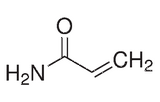
Acrylamide for protein electrophoresis

Acrylamide for protein electrophoresis

Protein gel electrophoresis is a fundamental technique for separating proteins based on their size and charge, and it can be performed on either agarose gels or acrylamide gels. The latter is more commonly used in protein analysis and is specifically referred to as polyacrylamide gel electrophoresis (PAGE).

PAGE uses a cross-linked acrylamide gel matrix formed by the polymerization of acrylamide monomers in the presence of bis-acrylamide, which acts as a cross-linker. This polymerization reaction is catalyzed by ammonium persulfate (APS) and TEMED (N,N,N',N'-tetramethylethylenediamine). APS generates free radicals that initiate polymerization, while TEMED accelerates this process. The result is a three-dimensional mesh network whose pore size depends on the total concentration of acrylamide and bis-acrylamide.

Effect of Acrylamide Concentration

The acrylamide concentration directly influences the gel’s pore size and thus its sieving properties. Lower percentages of acrylamide (usually 4–8%) form gels with larger pores, which allow larger proteins to migrate more freely through the matrix. Conversely, higher percentages (around 12–20%) produce gels with smaller pores, restricting the passage of large proteins and improving the resolution of smaller proteins. This tunable pore size is crucial for adapting the gel to the molecular size range of the proteins of interest.

Types of Acrylamide Gels

  • Uniform Gels: Maintain a constant acrylamide concentration throughout their length; simpler to prepare and suitable when the protein size range is narrow.
  • Gradient Gels: Feature a continuous increase in acrylamide concentration from top to bottom, creating a gradually tightening mesh. This allows simultaneous resolution of a broad range of proteins—from high molecular weight to low molecular weight—within the same gel.

In summary, acrylamide gels behave as molecular sieves in PAGE, where the degree of polymerization and acrylamide concentration determines the mesh size and controls protein migration. By selecting the appropriate gel percentage or gradient, researchers can optimize the electrophoresis to achieve better resolution tailored to the sizes of proteins under study. This flexibility makes PAGE a highly versatile and widely used method in proteomics and molecular biology.

Frequently Asked Questions (FAQ)

How can I quickly find a acrylamide product?

To find a acrylamide product, use the search function by name, product code, supplier, brand or sub-category. You can also browse the product families listed on the page to identify an available product code, an alternative or an equivalent product.

Does Neo Biotech stock several product codes in the acrylamide category?

Yes, Neo Biotech distributes several product references in the acrylamide category, sourced from specialist suppliers. Depending on the product family, references may vary in terms of format, packaging, brand, supplier, technical specifications or availability.

Can I request a quote for acrylamide products?

Yes, you can request a quote for acrylamide products from the product page or by contacting Neo Biotech (info@neo-biotech.com). To help us process your enquiry, please provide, where possible, the product name, catalogue reference, required quantity, the supplier or brand you are looking for, and the country of delivery.

How can I find out if a acrylamide product is available to order?

The availability of a acrylamide product depends on the product code, supplier, packaging and country of delivery. For up-to-date information, please check the product details page or contact Neo Biotech with the product code or name of the product you are looking for.

What should I do if I cannot find the acrylamide product I am looking for?

If the acrylamide product you are looking for does not appear in the catalogue, please contact Neo Biotech with the available information: product name, reference number, supplier, brand, format or packaging. The team will be able to search for the reference number within its network of suppliers or suggest an available alternative.

Are all acrylamide products available under the same terms and conditions?

No. Ordering, delivery, storage and documentation conditions may vary depending on the product type, the supplier and the applicable regulations. Certain product codes may require specific approval, specialised transport, a safety data sheet or additional information prior to ordering.

Search result : 651 product found

Refine your search :

RUO
CE/IVD
NEW
  • Unconjugated 2
  • Biochemicals
APPLY FILTERS
REINITIALIZE


Cat#
Description
Cond.
Price Bef. VAT
NB-42-49556-25g
 25g 
NB-42-49556-100g
 100g 
NB-42-49556-500g
 500g 
NB-64-67427-5g
 5g 
NB-64-89383-10mg
 10mg 
NB-64-89383-50mg
 50mg 
NB-42-49676-1g
 1g 
New
NB-64-45648-2g
 2g 
NB-42-49676-5g
 5g 
NB-64-45648-1mL
 1mLx10mM(inDMSO) 
New
NB-64-45648-10g
 10g 
New
NB-64-45648-5g
 5g 
NB-42-58982-1g
 1g 
NB-42-33318-1g
 1g 
NB-42-58982-5g
 5g 
New
NB-64-102977-100mg
 100mg 
New
NB-64-102977-25mg
 25mg 
New
NB-64-102977-10mg
 10mg 
NB-64-93138-5mg
 5mg 
New
NB-64-102977-50mg
 50mg 
    ‹
    ›