Cell signaling
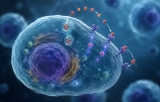
Cell signaling is the fundamental molecular language that governs all life. It encompasses the complex networks of communication that dictate cellular behavior, including growth, differentiation, metabolism, migration, and apoptosis. From the initial perception of an extracellular stimulus—such as a hormone, neurotransmitter, or mechanical force—to the precise activation of intracellular cascades, these pathways ensure coordinated responses to environmental changes and developmental cues (Hunter, 2000).
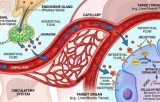
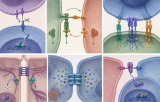
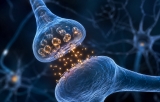
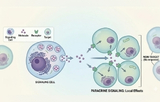
At its core, cell signaling relies on several distinct modes of communication. These include autocrine (self-signaling), paracrine (local signaling to nearby cells), endocrine (long-distance hormonal signaling via the bloodstream), and juxtacrine (direct cell-to-cell contact through membrane-bound ligands and receptors). A fifth, highly specialized mode is neuronal signaling, which involves the rapid, directional transmission of electrical impulses along axons, followed by chemical transduction across synapses via neurotransmitters. This form of signaling enables high-speed communication over long distances within the nervous system and is essential for sensory perception, motor control, learning, and memory (Purves et al., 2018).
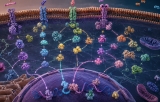
The molecular machinery of cell signaling includes receptor proteins—primarily G protein-coupled receptors (GPCRs), receptor tyrosine kinases (RTKs), ion channels, and ligand-gated ion channels—which transduce external signals into intracellular second messengers such as cAMP, Ca²⁺, and inositol trisphosphate (IP₃) (Lefkowitz, 2007). In neuronal signaling, voltage-gated ion channels and neurotransmitter receptors (e.g., AMPA, NMDA, and GABA receptors) play central roles in converting electrical activity into chemical messages.
A central mechanism in cell signaling is protein phosphorylation, a reversible post-translational modification that controls the activity, localization, and interaction of thousands of signaling proteins. Discovered over 50 years ago, phosphorylation remains the primary switch that turns signaling pathways on and off in response to stimuli (Pawson & Scott, 2005). The human genome encodes more than 500 protein kinases, the enzymes that catalyze phosphorylation, illustrating the immense scale and complexity of these regulatory networks (Manning et al., 2002). The evolution of phosphotyrosine signaling, in particular, has enabled multicellular organisms to develop sophisticated communication systems that coordinate tissue homeostasis, immune responses, and development (Lim & Pawson, 2010).
Ultimately, cell signaling is not only central to basic biological understanding but also provides the mechanistic insights necessary for deciphering disease pathogenesis—notably cancer, diabetes, neurological disorders, and immunological diseases. Aberrant signaling pathways drive uncontrolled proliferation, resistance to apoptosis, metastasis, as well as synaptic dysfunction and neurodegeneration, making them primary targets for modern therapeutic development (Sever & Brugge, 2015; Zoghbi & Bear, 2012).
References
Hunter, T. (2000). Signaling—2000 and beyond. Cell, 100(1), 113–127.
Lefkowitz, R. J. (2007). Seven transmembrane receptors: a brief personal retrospective. Biochimica et Biophysica Acta (BBA) - Biomembranes, 1768(4), 748–755.
Lim, W. A., & Pawson, T. (2010). Phosphotyrosine signaling: evolving a new cellular communication system. Cell, 142(5), 661–667.
Manning, G., Whyte, D. B., Martinez, R., Hunter, T., & Sudarsanam, S. (2002). The protein kinase complement of the human genome. Science, 298(5600), 1912–1934.
Pawson, T., & Scott, J. D. (2005). Protein phosphorylation in signaling–50 years and counting. Trends in Biochemical Sciences, 30(6), 286–290.
Purves, D., Augustine, G. J., Fitzpatrick, D., et al. (2018). Neuroscience (6th ed.). Sinauer Associates.
Sever, R., & Brugge, J. S. (2015). Signal transduction in cancer. Cold Spring Harbor Perspectives in Medicine, 5(4), a006098.
Zoghbi, H. Y., & Bear, M. F. (2012). Synaptic dysfunction in neurodevelopmental disorders associated with autism and intellectual disability. Cold Spring Harbor Perspectives in Biology, 4(3), a009886.