Endocrine Signaling
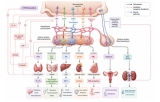
Endocrine signaling is a specialized mode of cell communication in which hormones are secreted directly into the bloodstream by endocrine glands and transported to distant target organs. Unlike autocrine or paracrine signaling, which act locally, endocrine signaling enables systemic, long-range coordination of physiological processes, including metabolism, growth and development, reproduction, fluid and electrolyte balance, and stress responses (Melmed et al., 2019).
The classic components of endocrine signaling include the endocrine gland (e.g., pituitary, thyroid, adrenal, pancreas, gonads), the hormone (the chemical messenger), the circulatory system (the delivery route), and the target cell, which expresses specific receptor proteins capable of binding the hormone. Hormones can be classified chemically into three major groups: peptide hormones (e.g., insulin, growth hormone), steroid hormones (e.g., cortisol, estrogen, testosterone), and amine hormones (e.g., epinephrine, thyroxine) (Norman & Litwack, 1997).
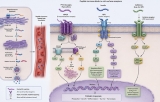
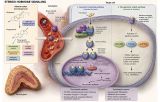
The molecular mechanisms of hormone action depend on the chemical nature of the hormone. Peptide and amine hormones are water-soluble and cannot cross the plasma membrane; they bind to cell surface receptors—primarily G protein-coupled receptors (GPCRs) or receptor tyrosine kinases (RTKs)—activating intracellular second messenger systems such as cAMP, IP₃/DAG, or Ca²⁺. Steroid hormones, in contrast, are lipophilic and diffuse across the plasma membrane to bind intracellular or nuclear receptors, directly regulating gene transcription (Evans, 1988). This fundamental distinction explains the rapid (seconds to minutes) effects of peptide hormones versus the slower (hours to days) but longer-lasting effects of steroid hormones.
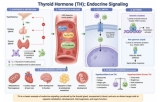
A defining feature of endocrine signaling is the existence of feedback loops, predominantly negative feedback, which maintain hormonal homeostasis. For example, thyroid hormones inhibit thyrotropin-releasing hormone (TRH) and thyroid-stimulating hormone (TSH) secretion, thereby preventing hormone excess. The hypothalamic-pituitary axis serves as a master regulatory hub, integrating neural and peripheral signals to control multiple endocrine glands (Chrousos, 2009).
Dysregulation of endocrine signaling underlies numerous diseases. Diabetes mellitus results from insufficient insulin production (Type 1) or insulin resistance (Type 2). Thyroid disorders (hyperthyroidism, hypothyroidism), growth hormone abnormalities (acromegaly, dwarfism), and adrenal insufficiency (Addison's disease) are direct consequences of disrupted endocrine communication (Melmed et al., 2019). Understanding endocrine signaling has enabled the development of hormone replacement therapies, receptor agonists and antagonists, and drugs targeting hormone biosynthesis.
References
Chrousos, G. P. (2009). Stress and disorders of the stress system. Nature Reviews Endocrinology, 5(7), 374–381.
Evans, R. M. (1988). The steroid and thyroid hormone receptor superfamily. Science, 240(4854), 889–895.
Melmed, S., Auchus, R. J., Goldfine, A. B., Koenig, R. J., & Rosen, C. J. (2019). Williams Textbook of Endocrinology (14th ed.). Elsevier.
Norman, A. W., & Litwack, G. (1997). Hormones (2nd ed.). Academic Press.