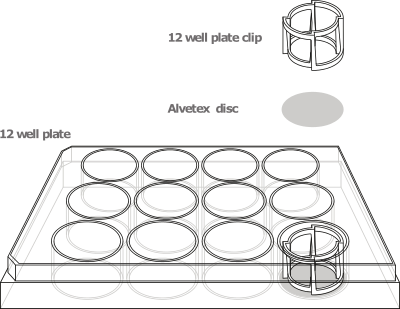
Alvetex® Scaffold 12-well polystyrene plates provide a reproducible three-dimensional (3D) cell culture platform that enables mammalian cells to proliferate within a highly porous, inert polystyrene scaffold rather than as conventional two-dimensional monolayers. Three-dimensional scaffold-based culture more closely reproduces native tissue architecture, promoting physiologically relevant cell morphology, cell–cell and cell–extracellular matrix interactions, gene expression, differentiation, extracellular matrix deposition, and tissue-specific function. These characteristics make scaffold-based 3D culture an established approach for cell biology, cancer research, tissue engineering, regenerative medicine, toxicology, and drug discovery, where predictive in vitro models are essential. The Alvetex® 12-well plate format is particularly suited to short-term 3D culture experiments in which medium is exchanged every 1–2 days while providing straightforward integration into standard laboratory workflows.
Key Features
-
Highly Porous 200 µm Inert Polystyrene Scaffold: Supports three-dimensional cell infiltration and tissue-like organization.
-
Enhanced Physiological Relevance: Promotes cell morphology, viability, differentiation, extracellular matrix production, and cellular function compared with conventional 2D culture.
-
Standard 12-Well Plate Format: Compatible with routine microscopy, molecular biology assays, histology, immunohistochemistry, and biochemical analyses.
-
Broad Research Applications: Suitable for a wide range of mammalian cell types used in 3D cell culture, cancer models, stem cell research, drug screening, toxicology, and tissue engineering.
-
Sterile, Ready-to-Use Format: Gamma-irradiated with a removable scaffold disc for convenient downstream processing and analysis.