

Cardiovascular Biospecimens: Standard & Custom Sourcing
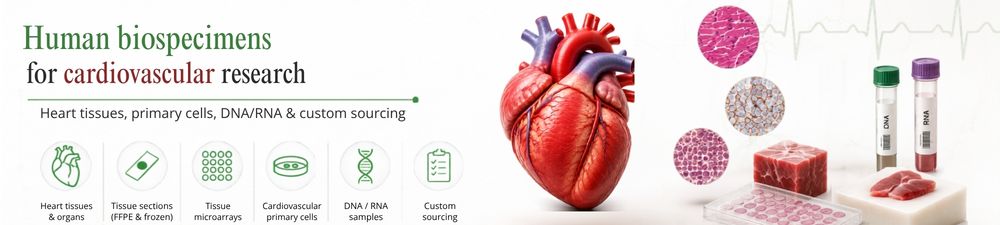
Human cardiovascular biospecimens enable the study of cardiovascular physiology, pathological mechanisms, tissue remodeling, vascular dysfunction, and cardiac biomarkers using biologically relevant specimens.
Browse human biospecimens for cardiovascular research, covering heart tissues and organs, cardiovascular primary cells, DNA/RNA samples, and custom sourcing options. Available specimen formats may include fresh, frozen, FFPE, and tissue arrays, depending on project requirements.Human heart tissues and organs
Human cardiac tissue samples for histology, immunohistochemistry, molecular profiling, biomarker analysis, and comparative studies of normal and diseased cardiac tissue
FFPE and frozen heart tissue sections
Human paraffin-embedded and frozen cardiovascular tissue sections supporting IHC, IF, ISH, molecular biology, and morphological analyses
Human Paraffin Tissue Array
Human cardiovascular and heart tissue arrays enable high-throughput analysis of protein and nucleic acid expression across multiple specimens, supporting biomarker validation, comparative tissue profiling, and translational cardiovascular research.
Human cardiovascular primary cells and cardiac cell models
Human cardiovascular primary cells, including cardiomyocytes, support in vitro studies of cardiac and vascular biology, disease mechanisms, electrophysiology, contractility, cardiotoxicity, endothelial dysfunction, fibrosis, and drug responses.
DNA and RNA from human samples
Human DNA and RNA samples for gene expression analysis, mutation profiling, qPCR, sequencing, biomarker discovery, and molecular characterization of cardiovascular and heart tissues.
Custom biospecimen requests
Custom sourcing of human cardiac biospecimens is available for defined tissue types, donor characteristics, disease states, preservation formats, matched samples, and project-specific documentation, subject to availability and feasibility.
Need assistance selecting human biospecimens for cardiovascular research?
Discuss your study design, sample requirements, and specimen availability.