

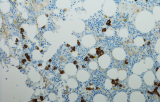
Immunostaining reagents are specialized products used to detect, visualize, and localize specific proteins, antigens, or other cellular targets in biological samples through antibody-based staining techniques. These reagents are widely employed in research, clinical diagnostics, and biomarker discovery to analyze the presence, distribution, and relative abundance of target molecules in tissues, cultured cells, or subcellular structures.
Immunostaining methods rely on the highly specific interaction between an antibody and its corresponding antigen. Once bound, the target can be visualized using chromogenic, fluorescent, or enzymatic detection systems. Depending on the application, immunostaining may be performed on tissue sections, whole cells, cell smears, or fixed cellular preparations. Common techniques include immunohistochemistry (IHC), immunocytochemistry (ICC), and immunofluorescence (IF).
Because staining quality depends on multiple experimental parameters, immunostaining workflows require a broad range of reagents designed to optimize specificity, reduce background, preserve morphology, and enhance signal detection.
Importance of Immunostaining Reagents
The use of appropriate immunostaining reagents is essential because they help to:
- Detect specific biomarkers in tissues or cells
- Visualize protein localization at cellular or subcellular level
- Differentiate normal and pathological structures
- Improve specificity of antibody-based detection
- Reduce non-specific staining and background noise
- Enhance signal intensity and image contrast
- Preserve sample morphology during processing
- Increase reproducibility between experiments
- Support diagnostic and translational research applications
