

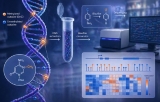
DNA methylation analysis detects the covalent addition of methyl groups to cytosine bases (5-methylcytosine, 5mC), primarily at CpG dinucleotides. This modification represents a key epigenetic mark involved in the regulation of gene expression, genomic imprinting, and various disease states.
These techniques enable the identification of aberrant methylation patterns, including hypermethylation leading to tumor suppressor gene silencing and hypomethylation associated with oncogene activation, thereby supporting precision diagnostics and therapeutic strategies.
Bisulfite Sequencing Methods
Whole Genome Bisulfite Sequencing (WGBS)
Whole Genome Bisulfite Sequencing (WGBS) provides single-base resolution across the entire methylome. Sodium bisulfite treatment converts unmethylated cytosines into uracil, while 5-methylcytosine remains unchanged, allowing differential detection after PCR amplification and sequencing.
- Coverage: Greater than 100× average sequencing depth, enabling interrogation of approximately 28 million CpG sites.
- Applications: De novo methylome mapping and cancer epigenomics studies.
- Limitations: High cost, PCR-induced bias, and potential incomplete bisulfite conversion.
Reduced Representation Bisulfite Sequencing (RRBS)
Reduced Representation Bisulfite Sequencing (RRBS) enriches CpG-dense regions through enzymatic digestion using MspI (recognition site: CCGG), enabling targeted and cost-effective methylation profiling.
- Coverage: Approximately 1–3 million CpG sites, with around 85% located in promoters and enhancers.
- Cost: Typically 10–20× lower than WGBS.
- Validation: Greater than 98% correlation with WGBS data in CpG island regions.
Antibody-Based Enrichment
Antibody-based enrichment methods, such as MeDIP (Methylated DNA Immunoprecipitation), utilize antibodies specific to 5-methylcytosine to isolate methylated DNA fragments. These approaches provide genome-wide profiling without single-base resolution and are commonly used for comparative methylation studies.