

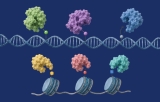
Epigenetic enzymes and regulators control gene activity without changing the underlying DNA sequence. They achieve this through modifications of DNA, histones, and higher-order chromatin structure, thereby influencing the accessibility of genes to the transcriptional machinery. These factors are central to cell differentiation, development, aging, and disease states such as cancer.
Main Enzyme Families
The major enzyme groups involved in epigenetic regulation include DNA methyltransferases (DNMTs), ten-eleven translocation enzymes (TETs), histone acetyltransferases (HATs), histone deacetylases (HDACs), histone methyltransferases (HMTs), and histone demethylases (HDMs). DNMTs catalyze the addition of methyl groups to DNA, while TET enzymes participate in the oxidation and removal of DNA methylation marks. HATs and HDACs regulate histone acetylation status, which directly influences chromatin accessibility and transcriptional activity.
Chromatin Remodeling Regulators
In addition to modifying epigenetic marks, certain regulators directly alter chromatin architecture. The SWI/SNF chromatin remodeling family, including BRG1, repositions nucleosomes and modulates chromatin accessibility, thereby influencing cell-type-specific gene expression programs. These remodeling complexes are particularly important during development and cellular reprogramming, where they contribute to the maintenance of active, silent, or poised transcriptional states.
Biological Functions
Epigenetic enzymes and regulators are essential for lineage commitment, stem cell maintenance, and tissue-specific gene expression. They enable cells containing identical genomes to acquire distinct cellular identities through stable yet reversible transcriptional programs. These epigenetic mechanisms can also be propagated during cell division, supporting the maintenance of cellular memory across successive generations of daughter cells.